“Peace is only better than war if peace is not hell too. War being hell makes sense.
-Walker Percy
The great Mississippi writer Walker Percy was entirely correct in his summation of peace and war in this short quote. It could be interpreted in many ways. When I wrote The Quiet Room, I was not thinking about Percy or even aware of his quote, but now his sentiment seems rather apt when applied to my own short story. I wrote two short stories for my collection, The Storekeeper’s Vigil & Other Tales. The first of those two short stories was The Quiet Room, a story about a World War II veteran who returned home, but not whole anymore.
Many returning veterans from the Second World War came home with internal struggles which they found difficult to understand and even more difficult to explain to those around them. Some turned to alcohol and others simply to hard work.
Every returning veteran had his own method of coping and some found themselves unable to cope at all.
Like many men of his generation, perhaps Josie Williams simply saw too much. No matter, he exemplifies the sentiment that peace is hell and a hell which the soldier brings home with him. Hell infects like a disease. Josie’s disease is the thousand yard stare, shell shock, that terribly debilitating condition today called post-traumatic stress disorder.
I created the character of Josie Williams but not the facts of the character. Josie is emblematic of so many young men who came home, but not whole. They had left something of themselves behind across the seas.
Josie was the compilation of many stories of young men I’d heard over the years who’d found the horrors they’d seen and experienced too traumatic with which to live, let alone forget.
As the grandson of a veteran of the European and Pacific theaters of war and a student of the Second World War, I felt a compulsion to write a story about the saddest of those veterans, those who returned completely hollowed out from the inside out. Josie Williams became that veteran. Even though he couldn’t tell his story or explain his horrors, I made sure his friend and fellow veteran Pete Mitchell could.
As terrible as the silence may have been in Josie’s sterile bedroom, the conversation between Josie’s friends was more horrific. Quentin Hays and Lindy Highsmith learn from Pete Mitchell exactly what brought their old friend Josie home more dead than alive emotionally. I gave Pete Mitchell the voice and the burden of telling Josie’s story because Josie simply couldn’t.
The story of Josie Williams is also a story about storytelling.
The short story, The Quiet Room, is meant to demonstrate how the most raw and tragic of experiences can be conveyed to help people understand the experiences and losses of others close to them. Much understanding comes from storytelling and storytellers.
The Quiet Room has a story to tell.
This post is part of a series of Behind The Book: The Storekeeper’s Vigil and Other Tales. Read the previous blog post here, and stay tuned for the next one about the second short story from the book.
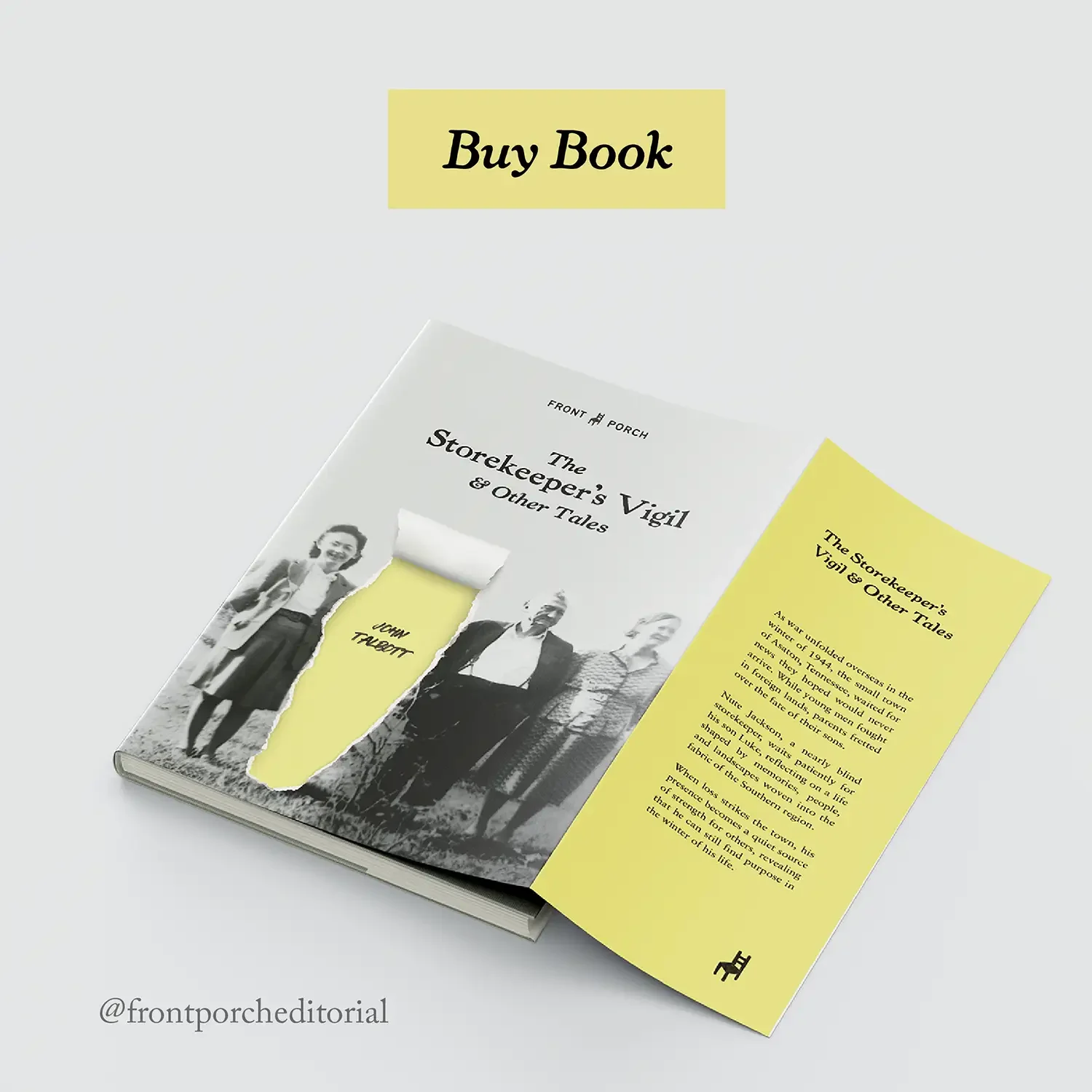
If you found this story interesting, you can learn more about the book or buy it here.